Are you looking for;
Business Website
News Portal
Digital Intergration
AI Solutions
Call +260 976344260
Business Website
News Portal
Digital Intergration
AI Solutions
Call +260 976344260

by admin on | 2026-05-15 15:55:46
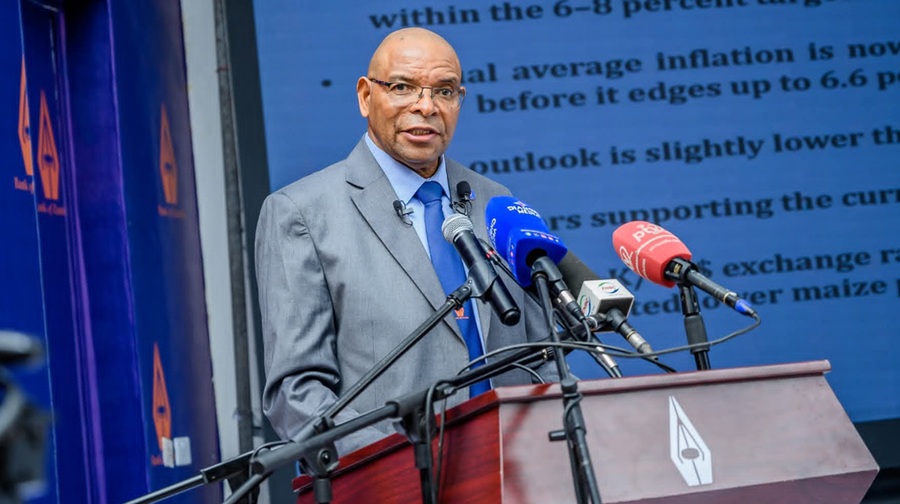
Bank of Zambia (BoZ) Governor Dr. Denny Hamachila Kalyala
…….as copper rich-nation bolsters reserves, gold stockpiles
Zambia slashed its lending rate (Monetary Policy Rate) by 25 basis points spurred by a slowdown in the inflation path as Africa’s second leading producer of the red metal raises its stockpiles its gold holdings to 3,380.78 kg since 2020.
Favored by fiscal discipline in public expenditure, good rainfall in the aftermath of an El Nino induced drought in the 2023/24 farming season and increased non-citizen’s participation in the country’s security market, inflation nose-dived into a much touted 6-8 percent target band at the close of the first quarter this year compared to 11.2 percent recorded at the end of 2025.
The Lusaka-based Bank of Zambia, in its Monetary Policy Rate report availed to Lusaka-based reporters, Wednesday, said it had cut the key interest rate to 13.25 percent driven by various fundamentals.
Drivers include a looming maize bumper harvest, among others, raising hope of a sustained level low inflationary rate.
The financial regulator attributes the slowdown in inflation to the appreciation of the Kwacha, spurred by continued base effects from the maize grain and other related products.
Governor, Denny Kalyalya said the Central Bank was optimistic the slowed to 7.1 percent in March this year from 11.2 percent at the close of 2025 and later eased further to 6.8 percent was a recognition of the good performance of the economy.
The economy buoyance, jump-started by fiscal policies and intended to stabilize the economy, and dictated under the International Monetary Fund was seemingly underway to resolving among other challenges, the debt burden, currently being restructured with 'lenders'.
Zambia is desirous the sustained drop in inflation would continue despite the Middle East conflict which has affected global crude oil prices and in turn affected pump prices.
The Lusaka-based Bank of Zambia envisages inflation to moderate further to 6.1 percent, relative to 6.7 percent, reported previously before it edges up to 6.6 percent, reported previously, before it edges to 6.6 percent in the first quarter 2028.
The Monetary Policy Committee, is however cautious of the hazards on the road noting that although various it was supported by lower inflation, there lies various risks including the Middle East conflicts, all pointing to the need for a cautious adjustment to the Policy Rate that maintains an appropriate stance on monetary policy.
” While the conflict in the Middle East has introduced notable uncertainties, inflation over the forecast horizon (2026Q2-2028Q1) is projected to remain well anchored within the 6–8 percent target band.
“The Committee, therefore decided to reduce the Policy Rate by 25 basis points to 13.25 percent” Dr. Kalyalya said.
The Donald Tramp instigated conflict, which started on 2 February this year against Iran, has severely disrupted global fertilizer supplies by restricting traffic through the Strait of Hormuz, causing fertilizer prices to surge over 40–50%.
With the Middle East supplying a significant portion of global urea and ammonia, the war has severely impacted shipping, leading to urea prices surpassing $700 per metric ton.
Urea prices in the Middle East jumped by roughly 40-50%, increasing from under $500 per metric ton to over $700, impacting global markets.
Producers in the Gulf region have reduced output by roughly 60% as shippers avoid the conflict zone, threatening critical shortages during the northern hemisphere's spring planting season.
And the mining sector, touted to be the country’s economic growth flagship contributed immensely to the inflow of the bulk of foreign exchange supply to the market with the country’s net foreign exchange sales swelling to US$626 million during the period under review.
The tax remittances from the mining sector to the Bank of Zambia stood at US$289.7 million. In total, the inflows raised total foreign exchange liquidity supplied by the mining sector to US$915.7 million from US$759.4 million in quarter four of last year.
foreign financial institutions ploughed in US$542.3 million to the market compared to US$335.6 million accrued in the previous quarter. Due to improved liquidity, net supply increased to US$230.2 million compared to US$93.4 million in the previous quarter.
Zambia’s Gross international reserves rose significantly, the first time in the history of the country, recording US$6.5 billion in February, mostly supported by foreign exchange purchases. Reserves closed the quarter at US$6.2 billion, representing 5.2 months of import cover.
The observed decline in March this year was attributed to Government payments US$114.7 million related to fuel procurement, the need by the Bank of Zambia to support the market cost US$106.5 million, and Government debt service repayment amounted to US$40.1 million.
This represented US$700 million higher than the December 2025 reserve stock of US$5.5 billion, equivalent to 4.8 months of import cover.
Gold purchases in Zambia since December 2020 soared to 3,380.78 kg.. During first quarter this year, 154.3 kg of gold was mopped up from various buying points, valued, US$25.4 million. The gold stockpiles of 3,380.78 kg is valued at US$500.9 million The average price of gold was US$4,688.53 per ounce.
Visits: 1177





CopyRight Coldreed Design and Developed by Yesebill 2026