Are you looking for;
Business Website
News Portal
Digital Intergration
AI Solutions
Call +260 976344260
Business Website
News Portal
Digital Intergration
AI Solutions
Call +260 976344260

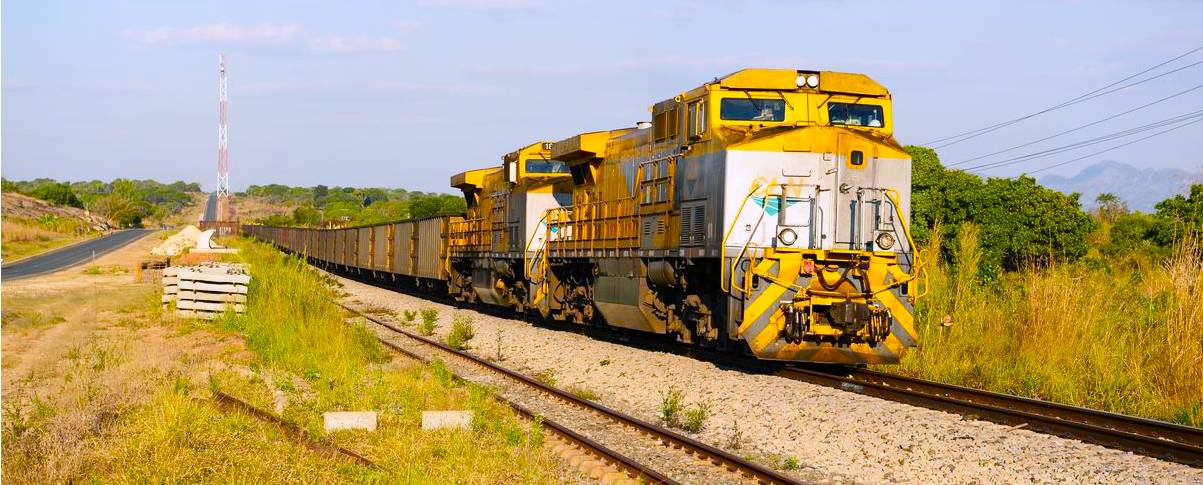
The Lobito Corridor, a US- and EU-backed project linking Angola, the \r\nDemocratic Republic of the Congo, and Zambia through rail, roads, and \r\nmodernised border posts. Its significance was underlined in November \r\n2025, when Zambia hosted the EU–Zambia Lobito Corridor Business Forum \r\nand witnessed the signing of a landmark memorandum of understanding. \r\nAfter the Lobito’s recognition we saw Anzana Electric and ZESCO \r\ncommitting to expand distribution networks and delivering reliable power\r\n to households and businesses along the corridor. We also see the \r\ntransport sector improving by introducing Electric mobility.
The \r\nelectric vehicle story is still early, but it is already moving. Between\r\n January 2024 and July 2025, 896 electric vehicles (EVs) were imported \r\nand 269 registered after customs duties were removed. . The figures may \r\nlook modest beside mature markets, yet this is how new industries begin:\r\n quietly, then suddenly. Imports have surged by 1,345 percent since duty\r\n removal, signalling pent-up demand and a policy lever that works
The\r\n route mirrors the Lobito Corridor, a US- and EU-backed project linking \r\nAngola, the Democratic Republic of the Congo, and Zambia through rail, \r\nroads, and modernised border posts. Its significance was underlined in \r\nNovember 2025, when Zambia hosted the EU–Zambia Lobito Corridor Business\r\n Forum and witnessed the signing of a landmark memorandum of \r\nunderstanding. Anzana Electric and ZESCO committed to expanding \r\ndistribution networks and delivering reliable power to households and \r\nbusinesses along the corridor, mobilising private and public capital for\r\n rural electrification and clean logistics.
Across Africa, the shift \r\nis no longer theoretical. The Africa E-Mobility Report 2025 estimates \r\nthat at least 30,000 EVs are now active in Africa, dominated by two- and\r\n three-wheelers but still dwarfed by Africa’s roughly 48 million \r\nconventional vehicles. ITDP’s reflections from Africa E-Mobility Week \r\n2025 show growth being driven by commercial logic rather than novelty: \r\nelectric motorcycles, delivery fleets, buses, and taxis that save money \r\nevery day. The point is not to celebrate small numbers, but to recognise\r\n what they represent: a market being born and an industrial corridor \r\nopportunity waiting for the African Continental Free Trade Area \r\n(AfCFTA)to turn movement into trade.
That opportunity became \r\nvisible on 5 October 2025, when a fleet of EVs left Nairobi at dawn \r\nunder the banner Road to Addis. Over 878 kilometres, Kenya Power’s \r\nconvoy spent just US$27.19 on electricity, compared with roughly US$170 \r\nfor a petrol vehicle, delivering six-fold cost savings. This was \r\nAfrica’s first cross-border electric vehicle expedition and a roving \r\nlaboratory. Artificial-intelligence tools optimised routing and battery \r\nhealth, engineers tested charging equipment under extreme heat, and \r\nregulators observed what worked and what failed. For Kenya, whose fuel \r\nimport bill exceeds KSh 600 billion annually, each electric kilometre \r\nrepresented both fiscal relief and climate action.
The AfCFTA is \r\noften discussed in policy language, but its promise is practical: move \r\ngoods faster, cheaper, and more predictably across borders. EVs matter \r\nbecause they are not only vehicles. They are rolling demand for \r\nelectricity, software, batteries, charging services, maintenance jobs, \r\ninsurance products, data analytics, and new financing models, an \r\nindication of high employment levels on the market. If the ecosystem is \r\nbuilt deliberately, EV adoption can become an engine of intra-African \r\ncommerce, not merely a cleaner way to move people.
This is where \r\ncorridor logic becomes decisive. Road to Africa positions itself as a \r\nmulti-year effort to test, document, and accelerate electric trade \r\ncorridors aligned with AfCFTA, converting proof into actionable \r\nroadmaps. It targets real bottlenecks traders know well: road quality, \r\nborder delays, grid reliability, charging access, and infrastructure \r\ngaps.
In April 2026, Road to Lusaka will trace roughly 2,440 \r\nkilometres from the port of Lobito on Angola’s Atlantic coast to \r\nZambia’s capital, following Trans-Africa Electric Highway 9 through a \r\ncorridor rich in copper, cobalt, and agriculturThe route mirrors the \r\nLobito Corridor, a US- and EU-backed project linking Angola, the \r\nDemocratic Republic of the Congo, and Zambia through rail, roads, and \r\nmodernised border posts. Its significance was underlined in November \r\n2025, when Zambia hosted the EU–Zambia Lobito Corridor Business Forum \r\nand witnessed the signing of a landmark memorandum of understanding. \r\nAnzana Electric and ZESCO committed to expanding distribution networks \r\nand delivering reliable power to households and businesses along the \r\ncorridor, mobilising private and public capital for rural \r\nelectrification and clean logistics.
Optimising EV, corridors also\r\n depends on border efficiency.

The minister said, currently the petrol price in India is one of the lowest. He said the oil marketing companies together suffered losses of Rs 27,276 crore due to high prices of c...
Read MoreUtility–manufacturer partnerships are emerging. In \r\nSeptember 2025, Eskom signed a cooperation agreement with BYD after \r\ndeploying EVs and chargers within its fleet, aiming to expand public \r\ncharging and integrate renewables and battery recycling. BYD plans \r\ndozens of dealerships and hundreds of fast chargers in South Africa by \r\n2026. Similar models can be replicated: ZESCO along the Lobito route, \r\nNAM Power in Namibia’s solar corridors, and regional power pools \r\nharmonising tariffs for cross-border electricity trade.
The next \r\nphase requires deliberate coordination. Governments should embed \r\nelectric corridors within AfCFTA implementation by aligning standards, \r\nborder procedures, and charging rules along key trade routes to reduce \r\ncosts and fuel imports. For power utilities and regional power pools, \r\nelectric corridors create predictable electricity demand that justifies \r\ngrid upgrades and cross-border coordination. For financiers and private \r\ninvestors, early corridors offer bankable, scalable projects as \r\nlogistics and fleet operators begin deploying cross-border electric \r\nservices.
Road to Lusaka should be promoted, but as a doorway into a \r\nbigger vision: an Africa where EVs do not merely reduce emissions, but \r\npull AfCFTA into daily life through faster movement, smarter borders, \r\nand industries Africans own. Electric corridors can help deliver that \r\nfuture.
About Author:
Kenny Suze is a Research and Policy Analyst at the Impact Center for Policy Research and a Corporate Security Expert with a background in law and strategic thinking.
 💬 1608
 💬 460



CopyRight Coldreed Design and Developed by Yesebill 2026