Are you looking for;
Business Website
News Portal
Digital Intergration
AI Solutions
Call +260 976344260
Business Website
News Portal
Digital Intergration
AI Solutions
Call +260 976344260

by admin on | 2025-12-04 07:51:51
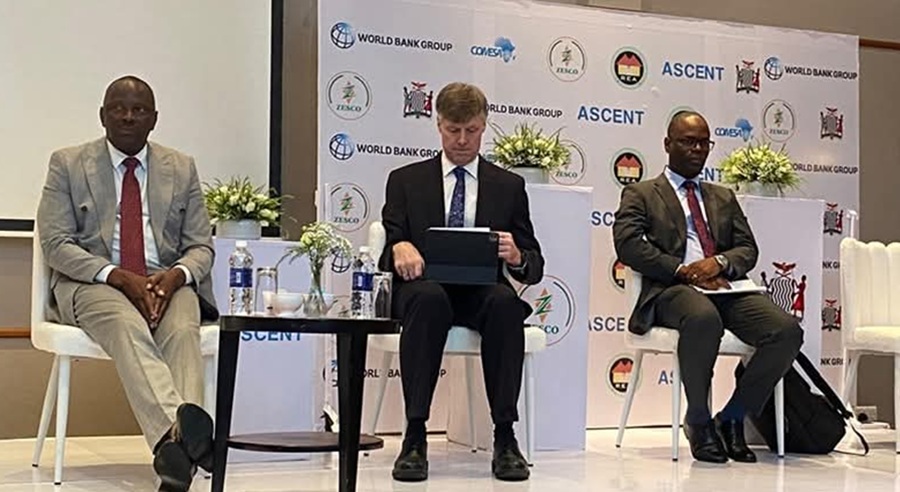
With Zambia facing critical energy shortage, supplying only three-hours of electricity per day across domestic, commercial and industrial consumers, a number of projects are being eked to ease the impact of energy deficiency.
Such a project that has been launched to tackle energy problems is Accelerating Sustainable and Clean Energy Access Transformation (ASCENT - Zambia) initiated and hugely funded by the World Bank in partnership with Common Market for Eastern and Southern Africa (COMESA).
The project targeting to connect 1.6million people by 2030, will be implemented by the Rural Electrification Authority (REA) and Zesco.
Launching the ASCENT project in Lusaka today, Energy Minister Malozo Chikote said the programme is aligned with Vision 2030 and the Mission 300 initiative, which seeks to deliver modern energy access to 300 million Africans.
Zambia’s electricity access remains uneven, with 80 percent access in urban areas compared to just 33 percent in rural communities.
The minister revealed a landmark connection fee subsidy that will reduce the cost of a standard ZESCO household connection from K4,846 to K300—a more than 90 percent reduction.
The subsidy will be available across all 10 provinces, with the 2026 application window opening on 22 December 2025 and targeting 100,000 new connections in the first year alone.
ASCENT–Zambia will also support clean cooking, with more than 60,000 households expected to benefit from modern cooking technologies during the project period.
The programme introduces a results-based financing system aimed at ensuring accountability and speeding up the roll-out of on-grid and off-grid solutions.
World Bank Country Manager Dr. Achim Fock said the programme comes at a critical time, following energy shocks caused by El Niño-induced droughts which severely affected hydropower output.
He said ASCENT represents a key pillar in climate-resilient energy planning and will support a US$1.6 billion segment of the Government’s long-term electrification plan.
The initiative will promote renewable energy, strengthen institutions, expand clean cooking solutions, and empower SMEs, farmers, schools, and health facilities.
COMESA Assistant Secretary General for Programmes, Ambassador Dr. Mohamed Kadah, described ASCENT as a transformative regional project designed to reduce energy poverty across Eastern and Southern Africa.
He said COMESA will provide technical assistance, advisory support, digital monitoring tools, and capacity building to support Zambia’s energy transition.
Rural Electrification Authority (REA)
Acting CEO Alex Mbumba said the programme marks a “defining moment” in Zambia’s energy journey.
He noted that despite progress, rural electrification has historically lagged due to underfunding—rising from only 4 percent in 2008 to 34 percent in 2023.
The reviewed Rural Electrification Master Plan has now been aligned to the universal access target for 2030.
Under ASCENT, REA aims to connect 368,400 households and 40,000 SMEs within five years through grid expansion, mini-grids, and solar home systems.
In 2026 alone, REA plans to achieve 109,000 new connections.
The programme is expected to improve livelihoods, stimulate rural enterprise, enhance public services, create green jobs, and increase women’s participation in the energy sector.
Minister Chikote further said Government reforms have unlocked greater private sector and development partner participation, adding that “no one will be left behind” in the national drive for universal energy access.
ASCENT–Zambia is now the flagship vehicle for delivering clean energy access, with REA, ZESCO, COMESA, and the World Bank pledging coordinated implementation to power inclusive growth, climate resilience, and sustainable development across the country.
Visits: 1022



CopyRight Coldreed Design and Developed by Yesebill 2026