Are you looking for;
Business Website
News Portal
Digital Intergration
AI Solutions
Call +260 976344260
Business Website
News Portal
Digital Intergration
AI Solutions
Call +260 976344260

by admin on | 2025-11-25 04:41:40
Choosing Life Over Profit: Zambia on Crossroad in the NCDs Batlle
Zambia
is grappling with a rapidly escalating public health crisis fueled by
Non-Communicable Diseases (NCDs), often described as “silent killers.”
In
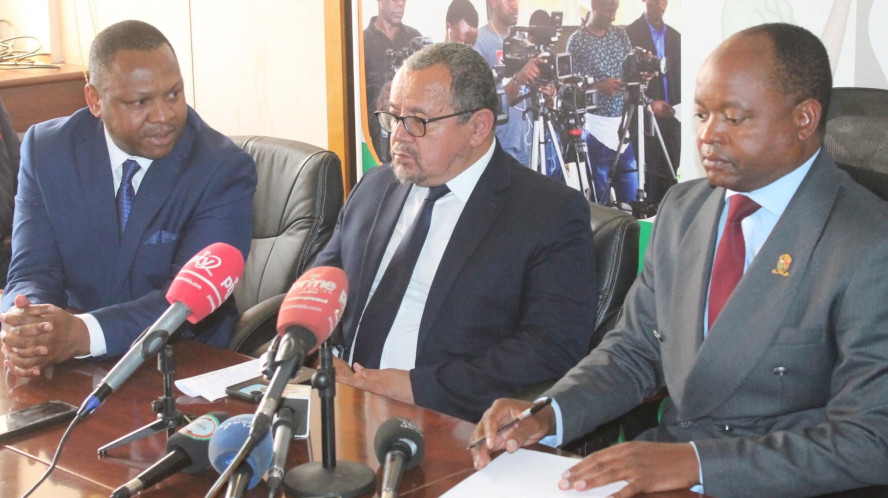
a unified call to action, Centre for Primary Care Research (CPCR)
Executive Director, Professor Fastone Mathew Goma, and Centre for Trade
Policy and Development (CTPD) Executive Director, Isaac Able Mwaipopo,
are championing the introduction of health taxes. They argue that such
taxes can ease the burden on the national treasury, reduce NCD-related
deaths, and mitigate the environmental harms of tobacco.
With just
eight months before the Fifth Session of the Thirteenth National
Assembly of Zambia rises on Friday 15th May, 2026, the two leaders have
urged parliamentarians to support the long-delayed Tobacco Control Bill
(TCB) 2025. They describe the bill as a crucial bulwark against
indiscriminate tobacco consumption.
When asked whether President
Hakainde Hichilema’s UPND administration would deliver where the
previous Patriotic Front (PF) administration failed, Chief Government
Spokesperson Cornelius Mweetwa hesitated, only promising a formal
response during the Ministry of Information and Media press briefing on
Thursday 18th September, 2025.
Despite the anticipation, the Tobacco
Control Bill was missing from Cabinet’s legislative agenda earlier this
week, raising concerns about government commitment.
A Call to Action
Civil
society groups, including CPCR, CTPD, and the Zambia Media Network
Against Tobacco (ZAMNAT), are urging lawmakers to fast-track the bill
once it is tabled before Speaker, State Counsel (SC) Ms. Nelly Butete
Kashumba-Mutti. They emphasize that this would align Zambia with its
international obligations under the United Nations World Health
Organisation Framework Convention on Tobacco Control (UN.WHO.FCTC),
which the country ratified on Friday, 23rd May, 2008.
“The evidence
is clear: health taxes deliver three wins—they save lives, reduce
healthcare costs, and provide sustainable revenue,” reads a joint
statement by CPCR and CTPD.
The UN-WHO’s MPOWER strategy highlights
raising taxes on harmful products as one of the most effective
demand-reduction measures. Zambia has already taken bold steps in this
direction. In the 2025 Supplementary Budget, government raised excise
duty on cigarettes by 66%, increased duties on beer, spirits, and wine
up to 80%, and doubled the tax on sugary drinks. These measures are
expected to generate ZMW 3.9 billion
resources that can strengthen health systems, expand access to care, and reduce the burden of NCDs.
More than Revenue
Health
experts stress that these measures are not about punishment but
protection. “When prices go up, consumption goes down. Young people are
less likely to start, and families are nudged toward healthier choices,”
explained Prof. Goma and Mr. Mwaipopo, praising Finance Minister Dr.
Situmbeko Musokotwane’s decision to fund part of Zambia’s K33.6 billion
supplementary budget through health taxes rather than borrowing.
They
argue that taxing tobacco, alcohol, and sugar-sweetened beverages is an
act of care: “These products may be marketed as pleasure, but their
long-term impact is pain.”
The Human Toll
The human cost of
inaction is staggering. According to WHO, tobacco use alone kills more
than 7,000 Zambians annually, while alcohol abuse and sugary drinks
drive rising cases of diabetes, liver disease, and cardiovascular
problems. The combined use of alcohol and tobacco significantly
increases the risk of cancers, heart failure, and mental health
disorders.
The Kidney Foundation of Zambia has also raised alarm over
the surge in chronic kidney disease (CKD), largely linked to untreated
hypertension and diabetes. Secretary General Augustine Mukuka described
dialysis as unaffordable for most patients, costing up to K4,000 per
session. With more than 1,000 patients in Lusaka alone in need of
treatment, he urged government to expand kidney care services and secure
NHIMA’s sustainability.
A Kidney Transplant Survivor’s Story: William Ng’andu Jr. on Living with NCDs
Sharing
his lived experience with a non-communicable disease (NCD), William
Ng’andu Jr. recounted his journey with chronic kidney disease (CKD) and
the second chance at life he received through a transplant.
“I owe a
lot of gratitude to the whole team at Dr. Javias Dialysis Center in
Rhodes Park, as well as Griffins Pharmacy, for always ensuring I had
access to the necessary medications and consumables. I am also grateful
to NHIMA for the financial support that allowed me to undergo twelve
dialysis sessions a month and covered the cost of consumables and lab
tests,” he said.
Ng’andu Jr. explained that post-transplant care has
been a critical part of his recovery. “The University Teaching Hospital
(UTH) has been exceptional in providing aftercare services. We have
dedicated clinics twice a week where doctors monitor our progress and
provide much-needed advice. UTH now also has a pharmacy solely for renal
patients, allowing us to access our medications without enduring long
queues.”
His survival was made possible through the selfless act of
his younger brother, Chipo Ng’andu, who donated a kidney. He also
expressed deep appreciation for a Californian surgeon who travelled to
Zambia to perform the transplant procedure.
Non-communicable diseases
(NCDs) such as cardiovascular illnesses, cancers, chronic respiratory
conditions, and diabetes remain a growing health challenge in Zambia,
accounting for a significant proportion of deaths nationwide.
Amid
this crisis, recent breakthroughs in local kidney transplants at Ndola
Teaching Hospital offer hope, cutting costs by more than half compared
to overseas procedures.
Why Zambia Must Act Now
Across Africa,
health taxes are proving effective. Rwanda’s tobacco tax cut smoking
rates from 13% to 7% since 2014. South Africa’s sugary drink levy
reduced consumption by nearly a quarter among children, while Kenya’s
alcohol taxes raised $400 million in 2023 for public services.
“Every
Kwacha raised through health taxes doubles its value by cutting future
healthcare costs,” Prof. Goma and Mr. Mwaipopo noted. They further
recommend closing loopholes, such as untaxed loose-leaf tobacco, which
currently undermines Zambia’s revenue potential.
As Zambia joins the
rest of the world in commemorating World Heart Day on September 29,
themed “Don’t Miss a Beat,” CPCR and CTPD are urging leaders to seize
this moment.
“Let this be the time we choose life. Enough is enough,” the two leaders declared.
The
World Heart Federation estimates that up to 80% of premature
cardiovascular deaths are preventable through affordable care, early
screening, and healthy lifestyle choices. For Zambia, decisive action on
health taxes and the enactment of the Tobacco Control Bill could mark
the turning point.
Non-communicable diseases (NCDs) such as
cardiovascular illnesses, cancers, chronic respiratory conditions, and
diabetes remain a growing health challenge in Zambia, accounting for a
significant proportion of deaths nationwide.
Amid this crisis, recent
breakthroughs in local kidney transplants at Ndola Teaching Hospital
offer hope, cutting costs by more than half compared to overseas
procedures.
Why Zambia Must Act Now
Across Africa, health taxes
are proving effective. Rwanda’s tobacco tax cut smoking rates from 13%
to 7% since 2014. South Africa’s sugary drink levy reduced consumption
by nearly a quarter among children, while Kenya’s alcohol taxes raised
$400 million in 2023 for public services.
“Every Kwacha raised
through health taxes doubles its value by cutting future healthcare
costs,” Prof. Goma and Mr. Mwaipopo noted. They further recommend
closing loopholes, such as untaxed loose-leaf tobacco, which currently
undermines Zambia’s revenue potential.
As Zambia joins the rest of
the world in commemorating World Heart Day on September 29, themed
“Don’t Miss a Beat,” CPCR and CTPD are urging leaders to seize this
moment.
“Let this be the time we choose life. Enough is enough,” the two leaders declared.
The
World Heart Federation estimates that up to 80% of premature
cardiovascular deaths are preventable through affordable care, early
screening, and healthy lifestyle choices. For Zambia, decisive action on
health taxes and the enactment of the Tobacco Control Bill could mark
the turning point.
Health First: Zambia’s bold move on 'Sin Taxes'
Zambia
is significantly raising health taxes on tobacco, alcohol, and sugary
drinks in a bid to tackle a growing public health crisis while also
increasing government revenue.
The 2025 Supplementary Estimates,
released by the Ministry of Finance and National Planning, propose
excise duty hikes expected to generate ZMW 3.9 billion.
Key measures
include a 66 percent increase in cigarette excise duty, raising it to
K750 per mille. Excise duty on alcohol will rise to 50 percent for clear
beer and 80 percent for spirits and wine. The import duty on
sugar-sweetened beverages (SSBs) will double to K 2.00 per liter.
According
to the World Health Organization (WHO), tobacco use kills an estimated
7,100 Zambians annually and contributes heavily to the burden of
non-communicable diseases (NCDs), which account for nearly one-third of
all deaths in the country.
Experts argue that a stronger tax increase
on tobacco alone could generate more than K2.3 billion annually,
compared to the current K160 million, while also discouraging
consumption.
However, enforcement remains a challenge, with a
loophole allowing untaxed loose-leaf tobacco—accounting for about 40
percent of the market.
Alongside the tax measures, the government is
considering the long-delayed Tobacco Products and Nicotine Products
Control Bill.
If enacted, the legislation would align Zambia with
the WHO Framework Convention on Tobacco Control and address loopholes,
including tax incentives for tobacco firms in Special Economic Zones.
International
evidence underscores the effectiveness of such policies. South Africa’s
2018 Health Promotion Levy reduced sugary drink purchases, while
Mexico’s 2014 SSB tax led to sustained declines, especially among
low-income households.
Studies show consumers often switch to healthier alternatives such as water.
To
strengthen tax collection, experts recommend adopting secure digital
tax stamps, already used successfully in Kenya and Tanzania, to improve
compliance and boost revenue at minimal fiscal cost.
The Africa CDC
estimates that a 20 percent price increase on these products across
Sub-Saharan Africa could double public healthcare funding.
Supporters
argue that the revenue raised could finance critical health services,
including medicines and clean water in schools, ensuring visible public
benefits.
Despite industry resistance, global studies suggest health
taxes do not significantly harm economies, and illicit trade is more
linked to weak enforcement than to high tax levels.
...final ends
By Hellen Bwalya
Visits: 1032








CopyRight Coldreed Design and Developed by Yesebill 2026